
GLP Collection
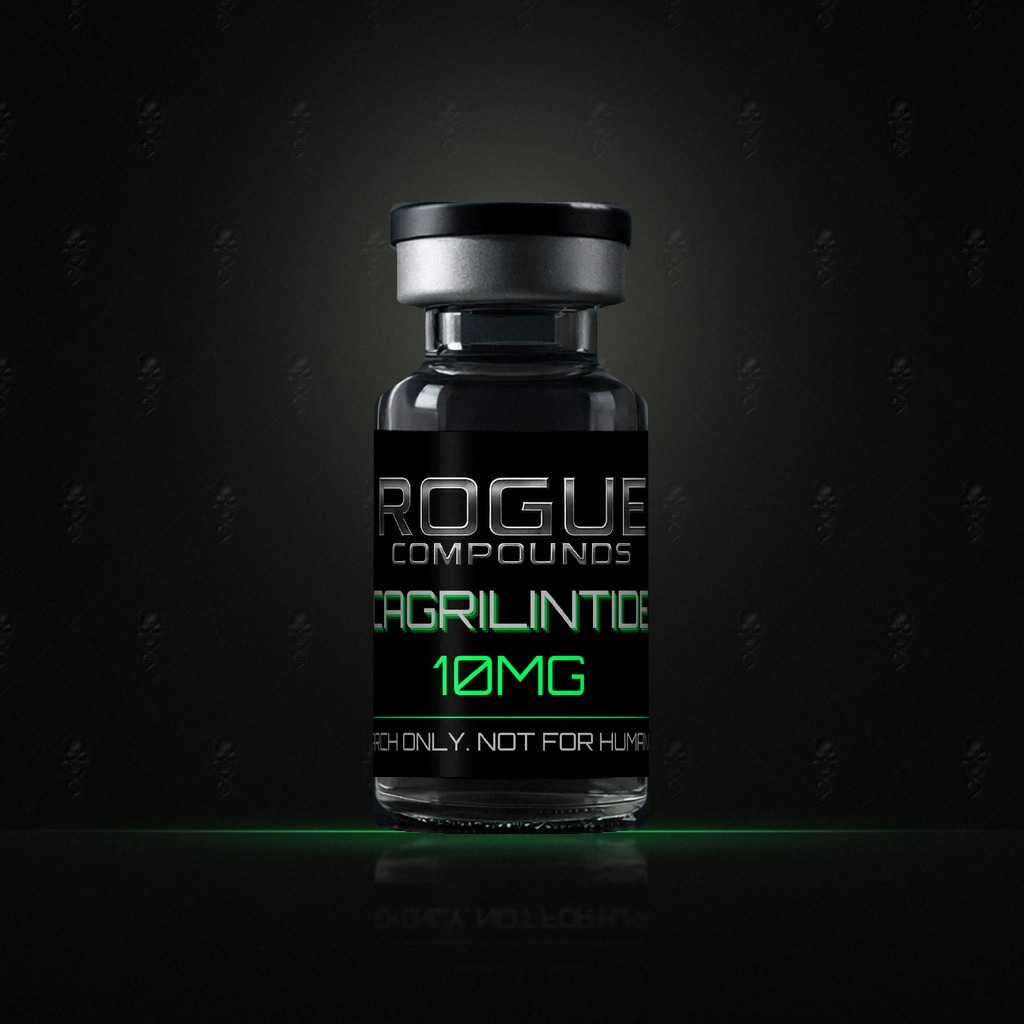
CAGRILINTIDE
CAS 1415456-99-34409.0 g/molSynthetic amylin analog peptide
Cagrilintide is a long-acting amylin analog studied in research models involving amylin receptor signaling, appetite-related pathways, metabolic regulation, energy-balance research, glucose-related biology, and body-composition pathway models.
$99.00
In stock
| Title | Range | Discount |
|---|---|---|
| Bulk pricing (same product) | 3 - 4 | 5% $94.05 |
| Bulk pricing (same product) | 5 - 9 | 10% $89.10 |
| Bulk pricing (same product) | 10 - 19 | 15% $84.15 |
| Bulk pricing (same product) | 20 + | 20% $79.20 |
Ships next business dayOrders placed before 12:00 PM MST (Mon–Fri) ship the same day.
UPS 2-Day shippingFree on orders over $250
2-day UPS shipping from the USATracked, discreet delivery on every order
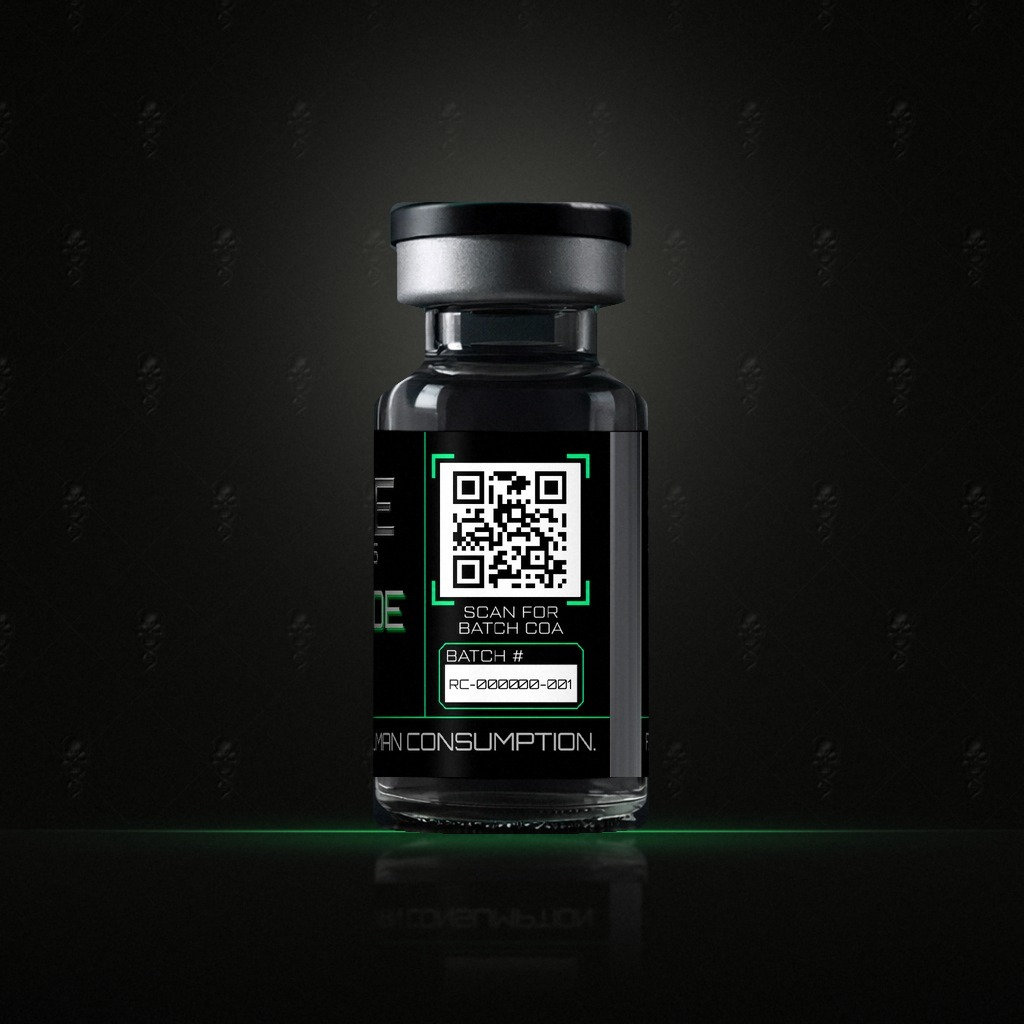
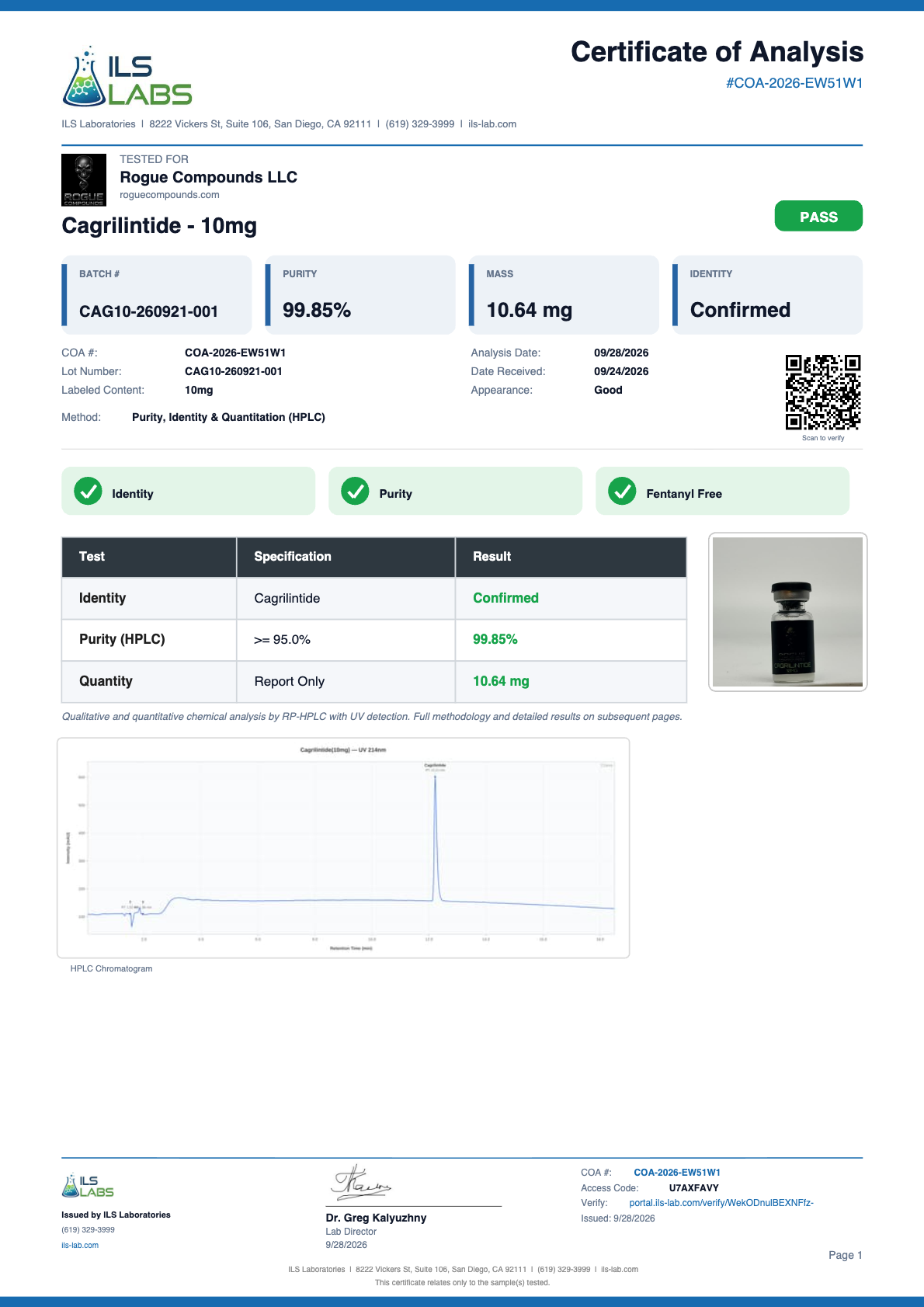
Scan-to-verify labelBatch QR on the vial opens the lab’s own report. COA on this page.
Secure encrypted checkout
Visa, Mastercard, Amex, Discover, Apple Pay, Google Pay, Affirm, Link, ACH & Zelle
FOR RESEARCH USE ONLY (RUO). NOT FOR DIAGNOSTIC, MEDICAL, HUMAN, OR ANIMAL USE.
Technical Specifications
Compound Information
Molecular Profile
What is CAGRILINTIDE?
CAS Number1415456-99-3
Molecular FormulaC194H312N54O59S2
Molecular Weight4409.0g/mol
Compound ClassSynthetic amylin analog peptide
↗ View on PubChem
Storage Requirements
Stability Information
Store sealedProtect from lightKeep dry
2–8°C
Long-term storageLyophilized powder, as shipped. Keep sealed and refrigerated for maximum stability. Protect from light.
Cool & dry
Short-term storageStore sealed in a cool, dry place, protected from light.
For laboratory research use only. Not for human or veterinary use. Chemical data sourced from PubChem.
Peer-Reviewed Literature
The research behind this compound, cited in full.
Every reference below is a published, peer-reviewed record, linked to its PubMed entry. Provided for educational reference only, not product claims. For laboratory research use only.
- 01 Efficacy and Safety of Cagrilintide Alone and in Combination with Semaglutide (Cagrisema) as Anti-Obesity Medications: A Systematic Review and Meta-Analysis Dutta D, et al.
- 02 Coadministered Cagrilintide and Semaglutide in Adults with Overweight or Obesity Garvey WT, et al.
- 03 Cagrilintide-Semaglutide in Adults with Overweight or Obesity and Type 2 Diabetes Davies MJ, et al.
- 04 Efficacy and safety of co-administered once-weekly cagrilintide 2·4 mg with once-weekly semaglutide 2·4 mg in type 2 diabetes: a multicentre, randomised, double-blind, active-controlled, phase 2 trial Frias JP, et al.
- 05 Once-weekly cagrilintide for weight management in people with overweight and obesity: a multicentre, randomised, double-blind, placebo-controlled and active-controlled, dose-finding phase 2 trial Lau DCW, et al.
Related products
-
AOD-9604
$59.00 Add to cart -
GLUTATHIONE
$65.00 Add to cart -
GHK-CU
$45.00 Add to cart -
GLP-2 TZ
Price range: $79.00 through $129.00 Select options This product has multiple variants. The options may be chosen on the product page