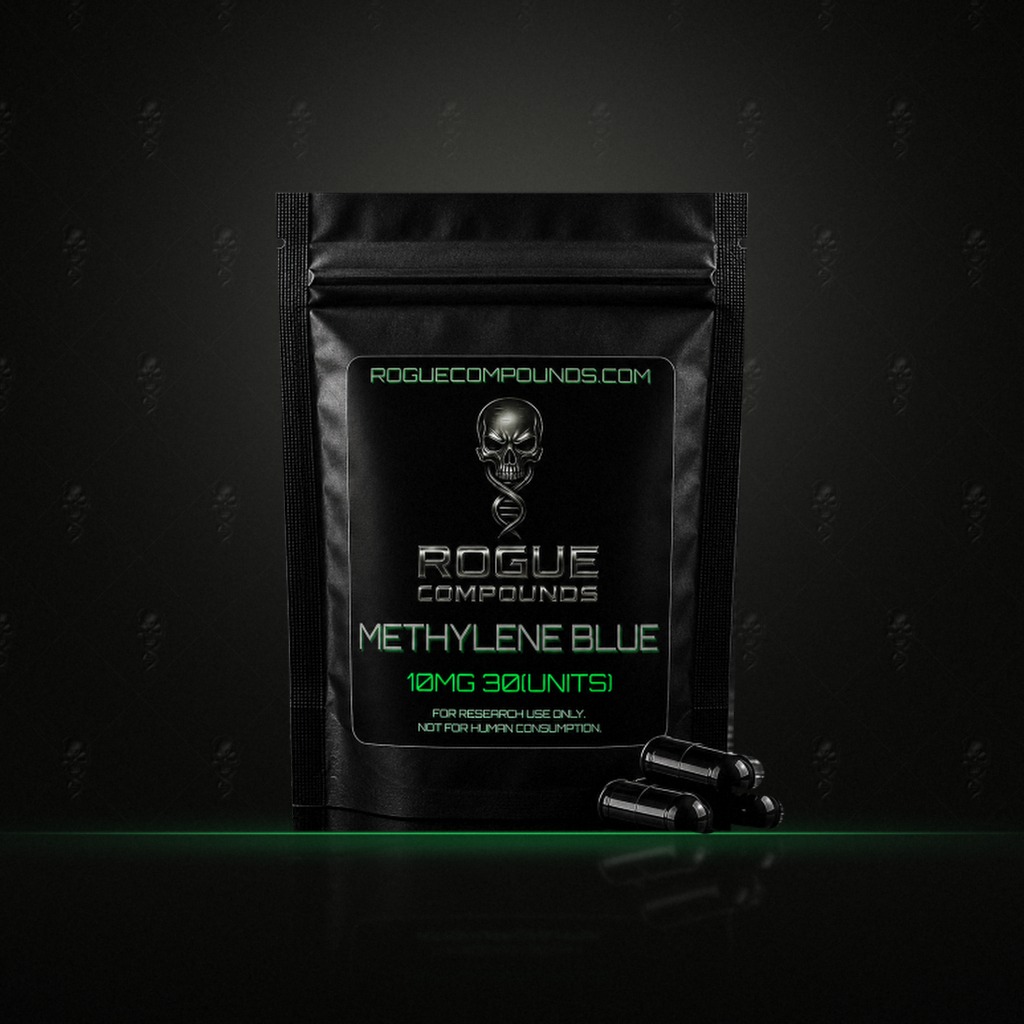
Methylene Blue
Methylene blue (methylthioninium chloride) is a phenothiazinium dye first prepared by Heinrich Caro in 1876. It was one of the first synthetic compounds used in medicine and served as a lead structure for later drug classes, including the phenothiazine antipsychotics. In the laboratory it remains a common biological stain and redox indicator. Here it is supplied in capsules as a research reagent.
Product Specifications
- Product: Methylene Blue
- Amount: See available options above
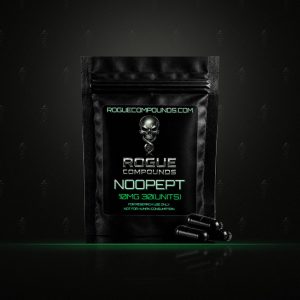
- Form: Capsules (dry fill), shipped in a sealed mylar pouch
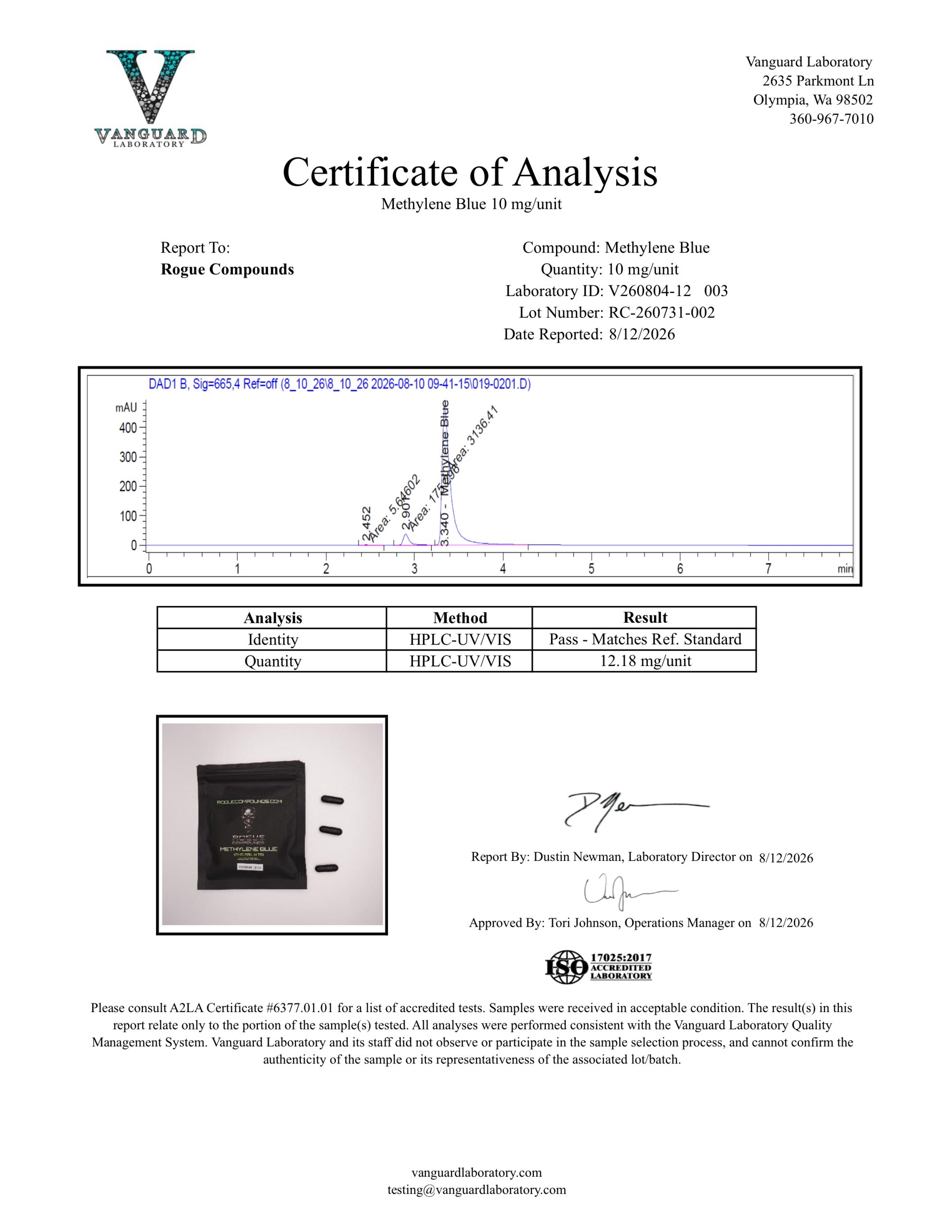
- Purity: Third-party tested by an ISO 17025 U.S. laboratory. See the batch Certificate of Analysis (COA) on this page.
- Storage: Keep sealed at room temperature (20–25°C), away from heat, moisture and light.
- Ships from: United States, 2-day UPS
Chemical Profile
- Compound class: Phenothiazinium dye (3,7-bis(dimethylamino)phenothiazin-5-ium chloride)
- Molecular formula: C16H18ClN3S
- Molecular weight: 319.9 g/mol
- CAS number: 61-73-4
What researchers study
Methylene blue cycles easily between an oxidized blue form and a reduced colorless form, leucomethylene blue. That redox behavior underlies most of its research uses:
- Mitochondrial electron transfer: the reduced form can accept electrons from NADH and pass them to cytochrome c, bypassing parts of the electron transport chain. Cell studies measure oxygen consumption, complex IV activity and markers of cellular senescence.
- Enzyme inhibition: methylene blue inhibits monoamine oxidase A, nitric oxide synthase and soluble guanylate cyclase; the MAO-A finding explains its known interaction with serotonergic drugs. Its metabolite azure B is also a potent MAO inhibitor.
- Neuroprotection models: cultured neurons and rodent models of ischemia and oxidative injury, and comparison of methylene blue with structural derivatives.
- Protein aggregation: in-vitro studies of tau and other aggregating proteins.
- Staining and analytics: vital staining, redox titration and photodynamic research.
Laboratory and animal findings do not establish effects in humans.
Regulatory status
Methylene blue in injectable form (for example, ProvayBlue) is an FDA-approved prescription drug for the treatment of acquired methemoglobinemia, and methylene blue is on the WHO Model List of Essential Medicines. The capsules sold here are a research reagent, not an approved drug product, and are not for human use.
Quality & Documentation
Every batch of Methylene Blue is made in small runs for Rogue Compounds and tested by an independent U.S. laboratory for identity (mass spectrometry) and purity (HPLC). The batch Certificate of Analysis is posted on this page and in our COA Library, so the pouch in your lab can be matched to its report.
Research overview
For a longer look at Methylene Blue, covering where it came from, what cell and animal studies have measured, and what the evidence does not show, read our Methylene Blue research overview. It is written as background reading, and every study it cites is linked to PubMed.
Selected literature
- Ramsay RR, et al. Methylene blue and serotonin toxicity: inhibition of monoamine oxidase A (MAO A) confirms a theoretical prediction. Br J Pharmacol. 2007;152(6):946-951. PMID 17721552
- Atamna H, et al. Methylene blue delays cellular senescence and enhances key mitochondrial biochemical pathways. FASEB J. 2008;22(3):703-712. PMID 17928358
- Petzer A, et al. Azure B, a metabolite of methylene blue, is a high-potency, reversible inhibitor of monoamine oxidase. Toxicol Appl Pharmacol. 2012;258(3):403-409. PMID 22197611
- Poteet E, et al. Neuroprotective actions of methylene blue and its derivatives. PLoS One. 2012;7(10):e48279. PMID 23118969
Research Use Only
This product is sold strictly as a research chemical for in-vitro laboratory and analytical use by qualified professionals. It is not a drug, dietary supplement, food, or cosmetic, and it is not intended to diagnose, treat, cure, or prevent any disease. Not for human or veterinary use. Rogue Compounds does not provide dosing, preparation, or usage instructions. The literature on this page is listed for scientific background only and does not describe this product or any use of it.