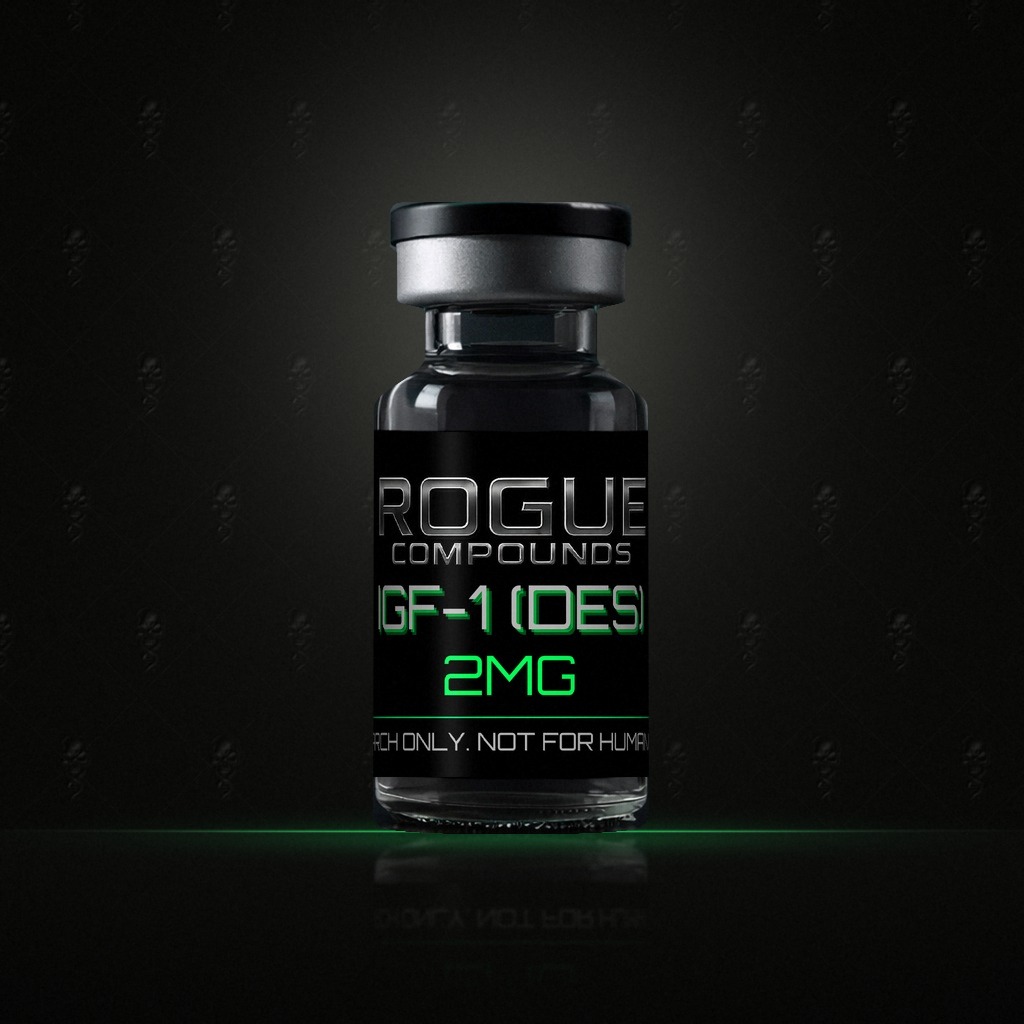
IGF-1 DES
IGF-1 DES, or des(1-3)IGF-1, is a naturally occurring truncated form of insulin-like growth factor-1 that lacks the first three N-terminal amino acids (Gly-Pro-Glu) of the 70-residue mature protein, leaving a 67-residue chain. It was first isolated from bovine colostrum and has also been found in brain tissue. The missing tripeptide sits in the region that IGF-binding proteins use to hold IGF-1, which is why the variant is studied as a more freely available form of the hormone.
Product Specifications
- Product: IGF-1 DES
- Amount: See available options above
- Form: Lyophilized powder
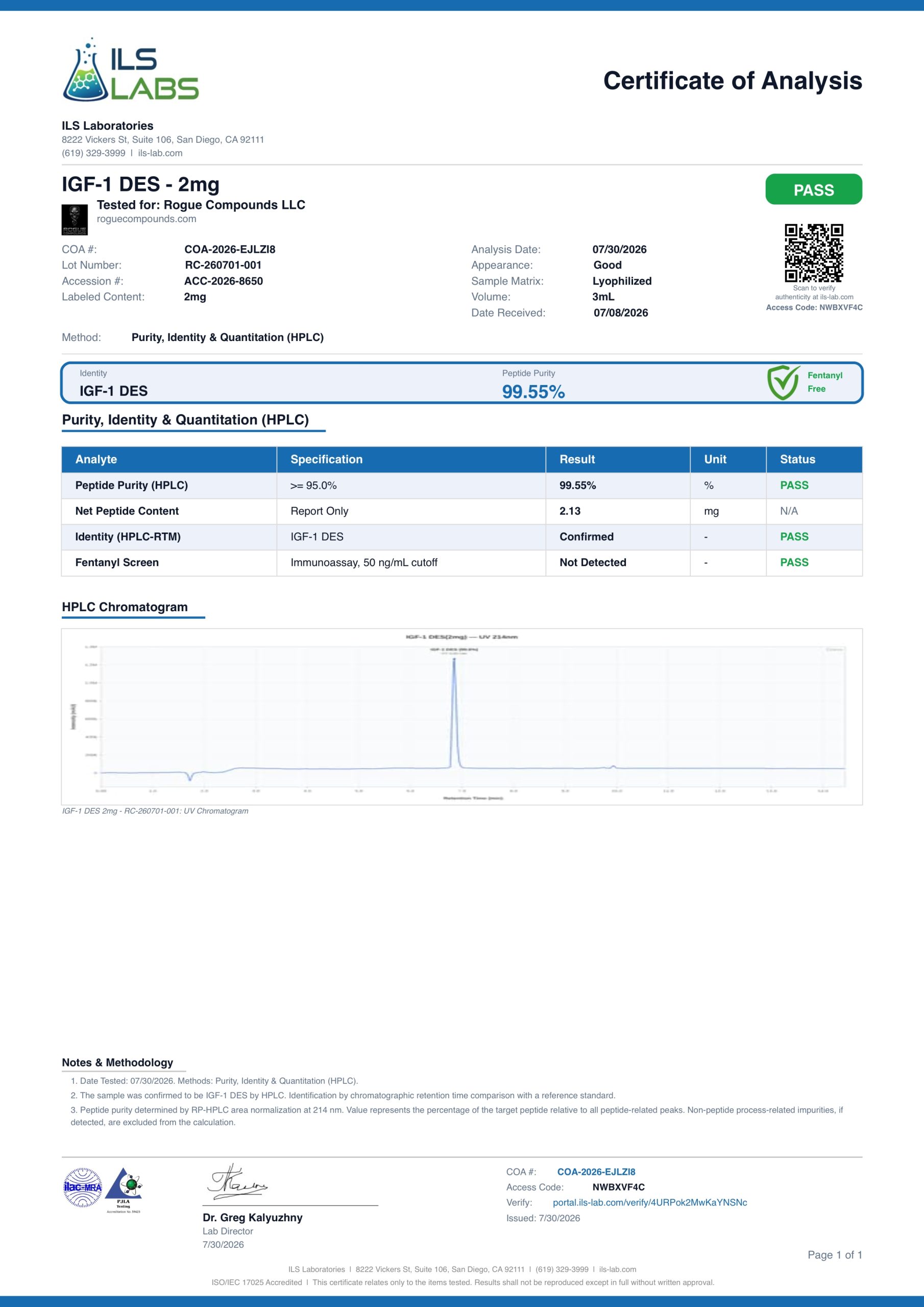
- Purity: Third-party tested by an ISO 17025 U.S. laboratory. See the batch Certificate of Analysis (COA) on this page.
- Storage: Keep sealed and refrigerated at 2–8°C (36–46°F), protected from light.
- Ships from: United States, 2-day UPS
Chemical Profile
- Compound class: Truncated IGF-1 variant, des(1-3)IGF-1, 67 residues, three disulfide bonds
- Note: Molecular formula, molecular weight and CAS for this batch are provided on the Certificate of Analysis.
What researchers study
IGF-1 signals through the IGF-1 receptor, a receptor tyrosine kinase that activates the PI3K/Akt and MAPK/ERK pathways. In serum and tissue fluids, most IGF-1 is held by six IGF-binding proteins (IGFBP-1 to -6), which control how much reaches the receptor. Des(1-3)IGF-1 binds the receptor normally but binds most IGFBPs much more weakly, so in culture systems that contain binding proteins it behaves as a more potent agonist than intact IGF-1.
- IGFBP biology: comparing des(1-3)IGF-1 with intact IGF-1 separates receptor effects from binding-protein effects in cell assays.
- Cell proliferation and differentiation: cultured myoblasts, fibroblasts, chondrocytes and epithelial cells, where binding proteins secreted by the cells themselves can mask IGF-1 activity.
- Local tissue processing: how proteolytic removal of the N-terminal tripeptide may regulate IGF-1 activity in tissues such as brain.
- The released tripeptide: Gly-Pro-Glu (GPE) is itself studied as a separate neuroactive peptide.
Regulatory status
IGF-1 DES is not approved by the FDA for any use. IGF-1 and its analogs are covered by the World Anti-Doping Agency’s Prohibited List under S2. It is sold here as a research reagent only.
Quality & Documentation
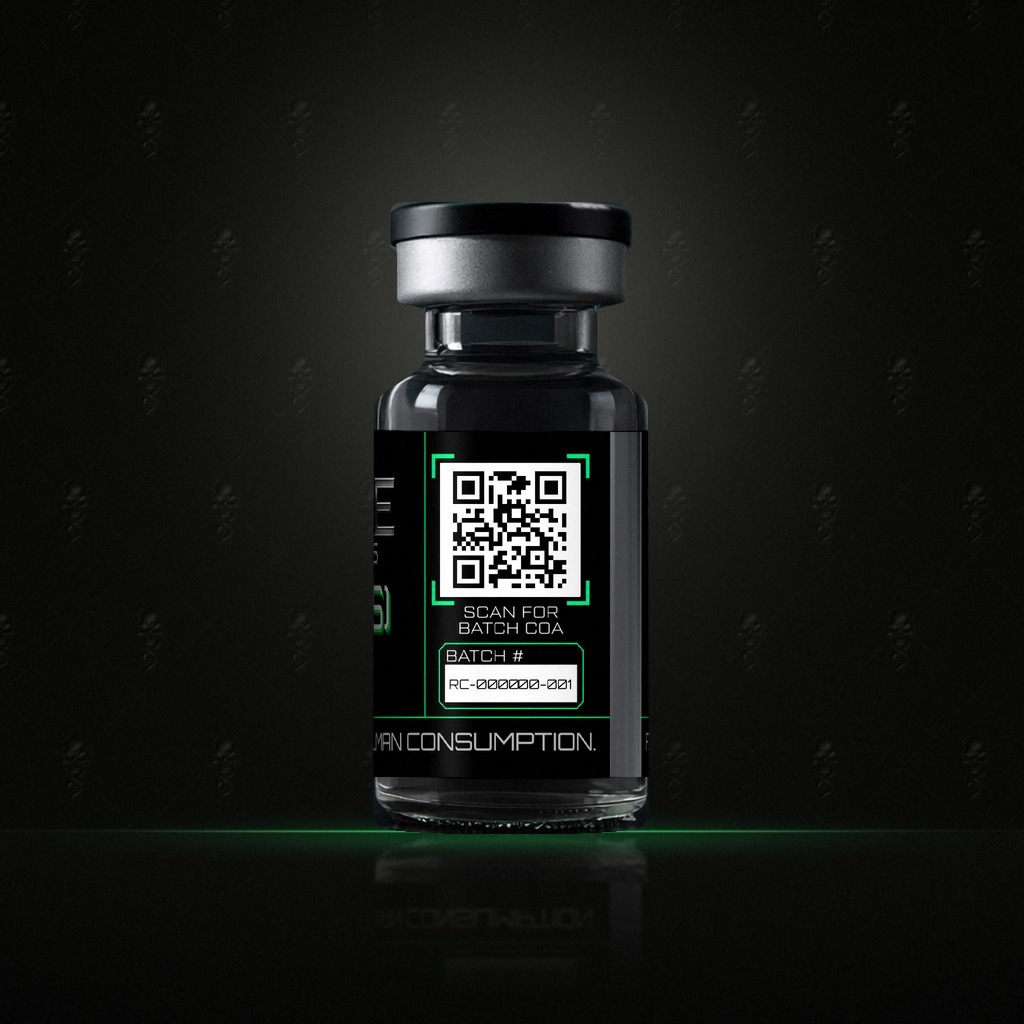
Every batch of IGF-1 DES is made in small runs for Rogue Compounds and tested by an independent U.S. laboratory for identity (mass spectrometry) and purity (HPLC). Each vial is labeled with its batch number and a QR code that opens the testing lab’s own report for that batch. The same batch Certificate of Analysis is posted on this page and in our COA Library, so you can check one against the other.
Research overview
For a longer look at IGF-1 DES, covering where it came from, what cell and animal studies have measured, and what the evidence does not show, read our IGF-1 DES research overview. It is written as background reading, and every study it cites is linked to PubMed.
Selected literature
- Ballard FJ, et al. Des(1-3)IGF-I: a truncated form of insulin-like growth factor-I. Int J Biochem Cell Biol. 1996;28(10):1085-7. PMID 8930132
- Lord AP, et al. Differences in the association of insulin-like growth factor-I (IGF-I) and IGF-I variants with rat, sheep, pig, human and chicken plasma-binding proteins. J Endocrinol. 1994;140(3):475-82. PMID 7514204
- Tomas FM, et al. Insulin-like growth factor-I and more potent variants restore growth of diabetic rats without inducing all characteristic insulin effects. Biochem J. 1993;291 ( Pt 3)(Pt 3):781-6. PMID 7683875
- Tomas FM, et al. IGF-I variants which bind poorly to IGF-binding proteins show more potent and prolonged hypoglycaemic action than native IGF-I in pigs and marmoset monkeys. J Endocrinol. 1997;155(2):377-86. PMID 9415072
- Mongongu C, et al. Detection of LongR(3) -IGF-I, Des(1-3)-IGF-I, and R(3) -IGF-I using immunopurification and high resolution mass spectrometry for antidoping purposes. Drug Test Anal. 2021;13(7):1256-1269. PMID 33587816
Research Use Only
This product is sold strictly as a research chemical for in-vitro laboratory and analytical use by qualified professionals. It is not a drug, dietary supplement, food, or cosmetic, and it is not intended to diagnose, treat, cure, or prevent any disease. Not for human or veterinary use. Rogue Compounds does not provide dosing, preparation, or usage instructions. The literature on this page is listed for scientific background only and does not describe this product or any use of it.