Tesamorelin
Tesamorelin is a synthetic analog of human growth hormone-releasing hormone that keeps the complete 44-amino-acid sequence of the native hormone and adds a trans-3-hexenoyl group to the N-terminal tyrosine. That single lipophilic cap protects the N-terminus from enzymatic cleavage while leaving the receptor-binding sequence intact. It was developed by Theratechnologies under the code TH9507.
Product Specifications
- Product: Tesamorelin
- Amount: See available options above
- Form: Lyophilized powder
- Purity: Third-party tested by an ISO 17025 U.S. laboratory. The batch Certificate of Analysis (COA) is posted on this page when the batch is in stock.
- Storage: Keep sealed and refrigerated at 2–8°C (36–46°F), protected from light.
- Ships from: United States, 2-day UPS
Chemical Profile
- Compound class: Synthetic GHRH(1-44) analog peptide, N-terminal trans-3-hexenoyl
- Sequence: (trans-3-hexenoyl)-Tyr-Ala-Asp-Ala-Ile-Phe-Thr-Asn-Ser-Tyr-Arg-Lys-Val-Leu-Gly-Gln-Leu-Ser-Ala-Arg-Lys-Leu-Leu-Gln-Asp-Ile-Met-Ser-Arg-Gln-Gln-Gly-Glu-Ser-Asn-Gln-Glu-Arg-Gly-Ala-Arg-Ala-Arg-Leu-NH2
- Molecular formula: C221H366N72O67S
- Molecular weight: 5136.0 g/mol
- CAS number: 218949-48-5
What researchers study
Most GHRH analogs in research use the truncated 1-29 fragment. Tesamorelin is different because it retains residues 30-44 of the native hormone, so it is the closest available stabilized analog of full-length GHRH. That makes it useful for asking whether the C-terminal region adds anything to receptor binding, stability or signaling compared with GHRH(1-29) analogs such as Sermorelin and CJC-1295.
- Non-clinical pharmacology: rat and dog studies characterized its GH-releasing activity, its stability relative to native GHRH, and its toxicology profile.
- GHRH receptor signaling: Gs/cAMP activation in pituitary somatotrophs and receptor-expressing cells, and how N-terminal capping affects potency.
- Adipose tissue and lipid metabolism: the GH/IGF-1 axis and visceral fat distribution have been a main focus of the published literature on this compound.
- Analytical chemistry: detection of the hexenoyl-modified peptide and its metabolites by mass spectrometry.
Regulatory status
A tesamorelin drug product was approved by the FDA in 2010 for a specific indication in HIV-associated lipodystrophy and has been evaluated in clinical studies. It is covered by the World Anti-Doping Agency’s Prohibited List under S2 (peptide hormones, growth factors, related substances and mimetics). The material sold here is a research reagent, not an approved drug product.
Quality & Documentation
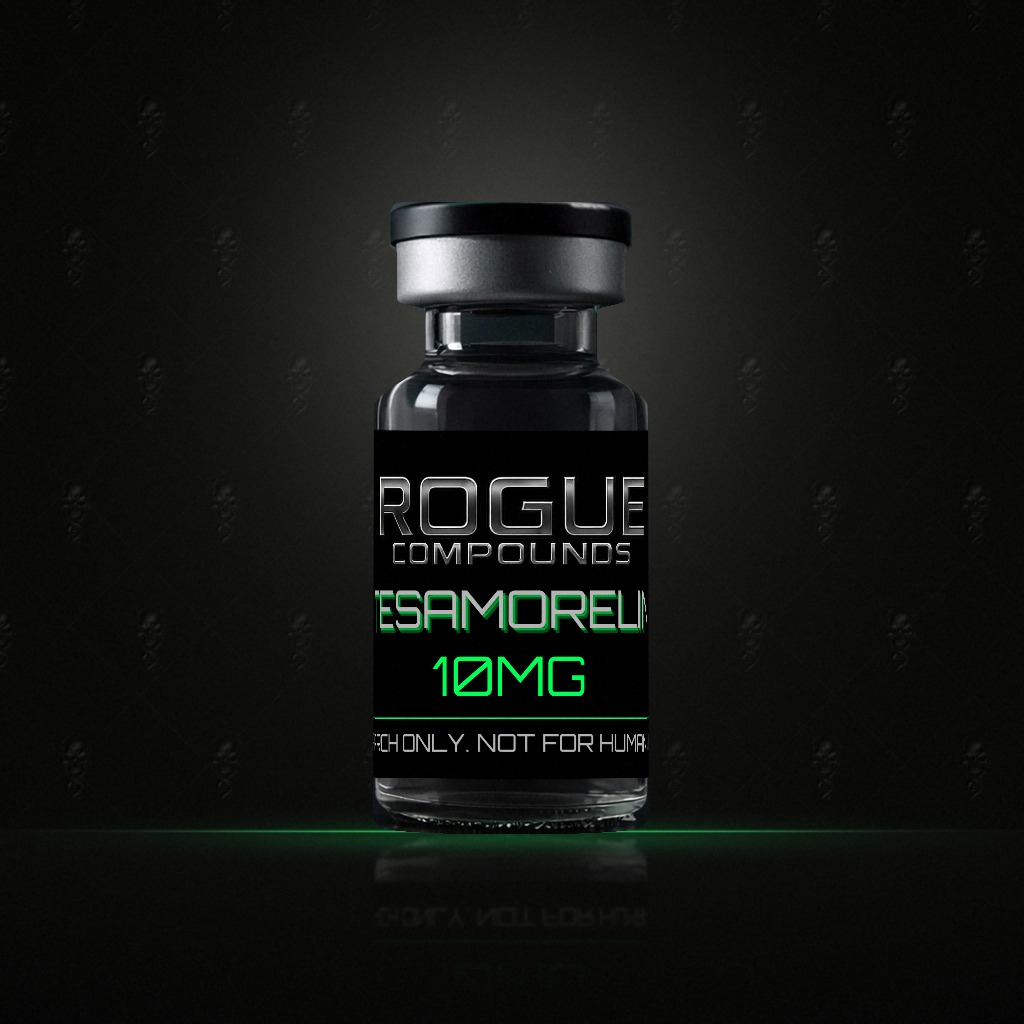
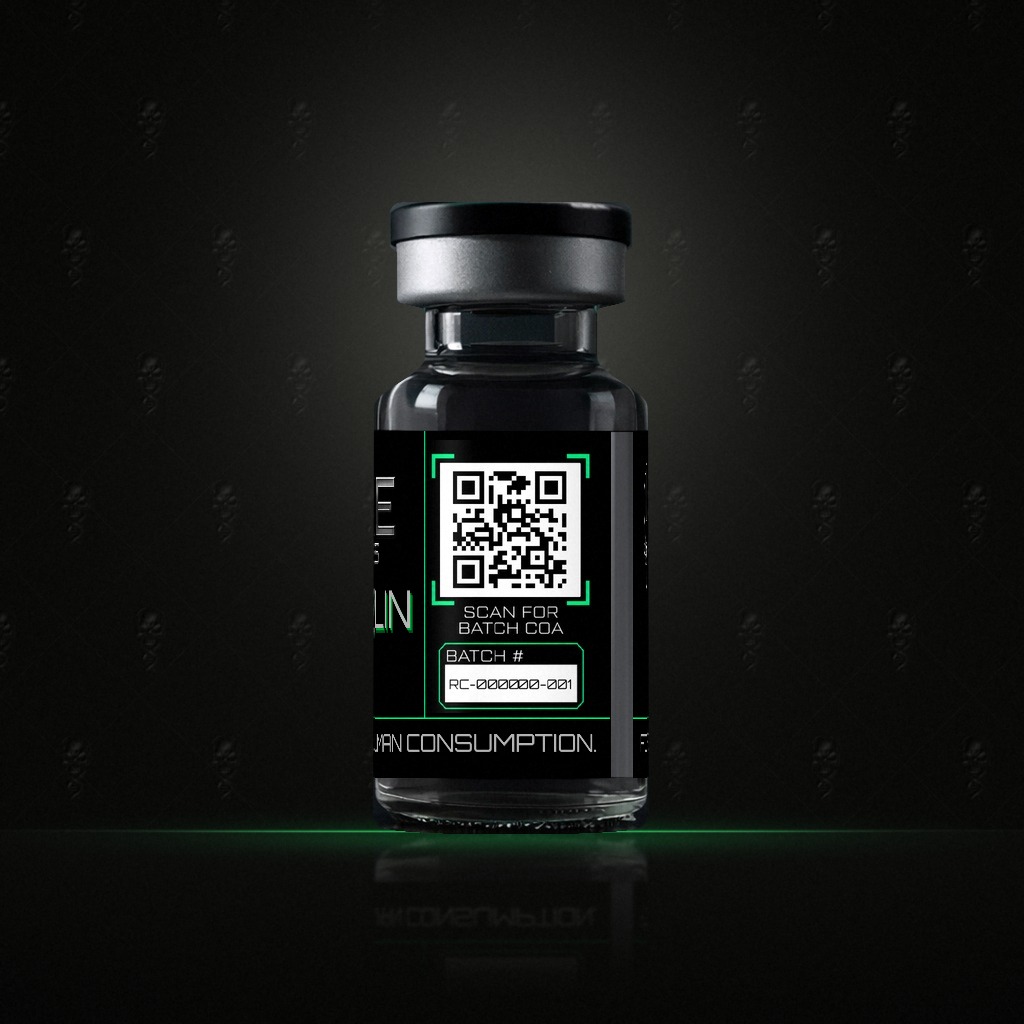
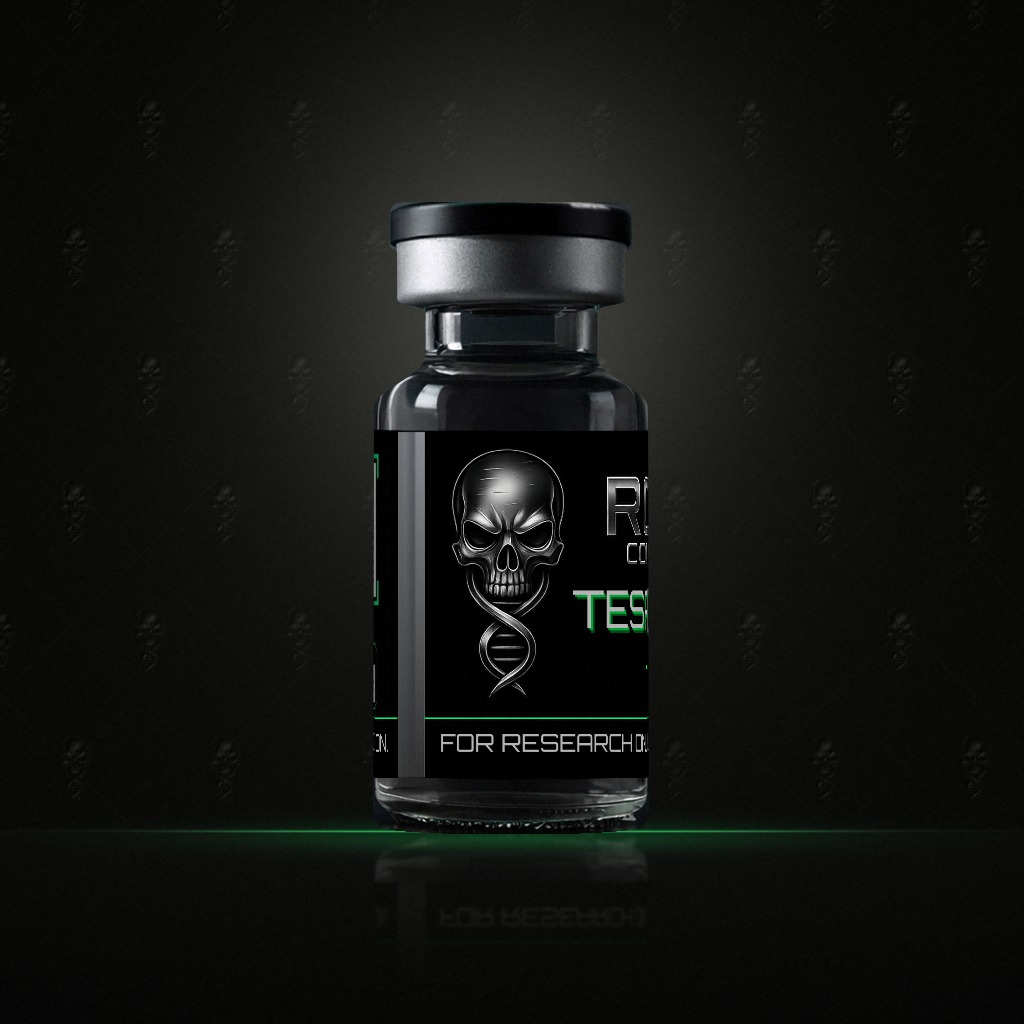
Every batch of Tesamorelin is made in small runs for Rogue Compounds and tested by an independent U.S. laboratory for identity (mass spectrometry) and purity (HPLC). Each vial is labeled with its batch number and a QR code that opens the testing lab’s own report for that batch. When a batch is in stock, its Certificate of Analysis is posted on this page and in our COA Library, so you can check one against the other.
Research overview
For a longer look at Tesamorelin, covering where it came from, what cell and animal studies have measured, and what the evidence does not show, read our Tesamorelin research overview. It is written as background reading, and every study it cites is linked to PubMed.
Selected literature
- Ling N, et al. Isolation, primary structure, and synthesis of human hypothalamic somatocrinin: growth hormone-releasing factor. Proc Natl Acad Sci USA. 1984;81:4302-4306. PMID 6431406
- Ferdinandi ES, et al. Non-clinical pharmacology and safety evaluation of TH9507, a human growth hormone-releasing factor analogue. Basic Clin Pharmacol Toxicol. 2007;100(1):49-58. PMID 17214611
- Dhillon S. Tesamorelin: a review of its use in the management of HIV-associated lipodystrophy. Drugs. 2011;71(8):1071-1091. PMID 21668043
- Falutz J, et al. Effects of tesamorelin, a growth hormone-releasing factor, in HIV-infected patients with abdominal fat accumulation: a randomized placebo-controlled trial with a safety extension. J Acquir Immune Defic Syndr. 2010;53(3):311-322. PMID 20101189
Research Use Only
This product is sold strictly as a research chemical for in-vitro laboratory and analytical use by qualified professionals. It is not a drug, dietary supplement, food, or cosmetic, and it is not intended to diagnose, treat, cure, or prevent any disease. Not for human or veterinary use. Rogue Compounds does not provide dosing, preparation, or usage instructions. The literature on this page is listed for scientific background only and does not describe this product or any use of it.