
Research overview
Glutathione
Glutathione is a tripeptide made of glutamate, cysteine and glycine, and it is the most abundant non-protein thiol in animal cells, typically present at millimolar concentrations. Its reactive sulfhydryl group lets it donate electrons, bind electrophiles and modify proteins, so it appears in almost every area of redox biochemistry.
Unlike most peptides discussed in research catalogs, glutathione is a basic metabolite rather than a signaling molecule with a dedicated receptor. Its research value lies in its chemistry and in the enzymes that make, use and recycle it. The sections below cover its unusual structure, its synthesis and redox cycle, the main enzyme systems and experimental uses, and the limits of how glutathione data are often interpreted.
Rogue Compounds carries GLUTATHIONE: current batch tested May 6, 2026 by Vanguard Laboratory, HPLC purity >99.80%. View GLUTATHIONE →
At a glance
- Class: Tripeptide thiol (γ-L-glutamyl-L-cysteinylglycine)
- Origin: Endogenous metabolite synthesized in the cytosol of virtually all animal cells (Lu, 2013)
- Structure: γ-Glu-Cys-Gly, reduced form (GSH); C10H17N3O6S; 307.33 g/mol; CAS 70-18-8
- Main research areas: redox balance, peroxide and xenobiotic detoxification, protein S-glutathionylation, biosynthesis regulation, culture-medium supplementation
- Regulatory status: Research chemical, not for human use
Structure and origin
The defining feature of glutathione is its first bond. Glutamate connects to cysteine through the carboxyl group on its side chain, the γ-carboxyl, rather than through the α-carboxyl used in ordinary peptide bonds. Most intracellular peptidases do not recognize this linkage, so glutathione is stable inside cells; it is broken down mainly on the outer cell surface by γ-glutamyl transpeptidase.
The cysteine thiol (–SH) is the functional center. Two molecules of reduced glutathione (GSH) can be oxidized and joined by a disulfide bond to form glutathione disulfide (GSSG). In most resting cells the great majority of the pool is in the reduced form, and shifts toward GSSG are a standard indicator of oxidative stress (Forman et al., 2009).
Cells build glutathione in two ATP-dependent steps. Glutamate-cysteine ligase joins glutamate and cysteine to form γ-glutamylcysteine, and glutathione synthetase then adds glycine. The first enzyme is rate-limiting and is feedback-inhibited by glutathione itself, while cysteine availability often sets the ceiling on how much can be made (Lu, 2013).
Mechanism: what the research shows
Glutathione acts through chemistry rather than a receptor, and its functions fall into a few connected cycles. In the peroxide cycle, glutathione peroxidases use GSH to reduce hydrogen peroxide and lipid hydroperoxides, producing GSSG. Glutathione reductase then converts GSSG back to GSH using NADPH, linking the glutathione pool to the pentose phosphate pathway and cellular energy status (Sies, 1999).
In the conjugation pathway, glutathione S-transferases attach GSH to electrophilic compounds, including drug metabolites, environmental toxicants and products of lipid peroxidation. The conjugates are then exported and processed further, which makes this pathway a central topic in xenobiotic metabolism and drug-resistance research (Hayes et al., 2005).
A third role is regulatory. Glutathione can form mixed disulfides with cysteine residues on proteins, a modification called S-glutathionylation that reversibly changes enzyme activity, and reviews describe this as one way the cellular redox state is translated into signaling changes (Forman et al., 2009).
Key areas of study
Biosynthesis and its control
Research on glutamate-cysteine ligase regulation, cysteine transport and transcriptional control of glutathione-synthesis genes uses liver models, cultured cells and genetically modified mice (Lu, 2013).
Redox measurement
The GSH/GSSG ratio is one of the most common readouts of oxidative stress in cell and tissue experiments. Methods range from enzymatic recycling assays to HPLC and mass spectrometry, and careful sample handling is needed to avoid artificial oxidation (Forman et al., 2009).
Detoxification enzymes
Glutathione S-transferase families, their substrates and their roles in toxicology are studied in liver preparations, recombinant enzyme assays and knockout models (Hayes et al., 2005).
Nutritional biochemistry
Wu and colleagues reviewed how dietary amino acid supply, especially of cysteine, glutamate and glycine, influences glutathione synthesis and turnover in animal studies (Wu et al., 2004).
Culture and assay reagent
Glutathione is used as a component of some cell, oocyte and embryo culture media, as a reducing agent in protein refolding, and as a substrate in assays of glutathione-dependent enzymes (Sies, 1999).
What the evidence does not show
- The biochemistry of endogenous glutathione is well established, but that does not show that glutathione supplied from outside a cell reaches the same compartments or has the same effects.
- Extracellular glutathione is broken down on cell surfaces, and intact uptake varies by cell type, which complicates interpretation of experiments that add it to culture or to animals.
- A low GSH/GSSG ratio is a marker of oxidative stress, not proof that glutathione depletion causes a given outcome.
- This article describes laboratory and animal research. It makes no claims about any effect in people, and the material sold here is not a drug, supplement or cosmetic.
Regulatory status
Rogue Compounds sells this material as a research chemical, not for human use. It is sold for laboratory research only.
Handling and storage in the lab
Lyophilized glutathione should be kept sealed and refrigerated at 2–8°C (36–46°F), protected from light.
Sourcing and documentation
Rogue Compounds has glutathione made in small batches. Every vial carries a batch number and a QR code that opens the independent U.S. testing lab’s own report for that batch, and the same batch COA is on the product page and in the COA Library.
View Glutathione on Rogue Compounds
References
- Sies H. Free Radic Biol Med. 1999;27(9-10):916-921. PMID 10569624
- Wu G, et al. J Nutr. 2004;134(3):489-492. PMID 14988435
- Hayes JD, Flanagan JU, Jowsey IR. Annu Rev Pharmacol Toxicol. 2005;45:51-88. PMID 15822171
- Forman HJ, Zhang H, Rinna A. Mol Aspects Med. 2009;30(1-2):1-12. PMID 18796312
- Lu SC. Biochim Biophys Acta. 2013;1830(5):3143-3153. PMID 22995213
Research use only. Rogue Compounds products are sold strictly for laboratory research. They are not for human or veterinary use, and nothing in this article is medical advice. The studies cited here describe published research, not this product or any use of it.
Compounds researchers often order together, 5% off as a set. Every vial ships with its batch COA.
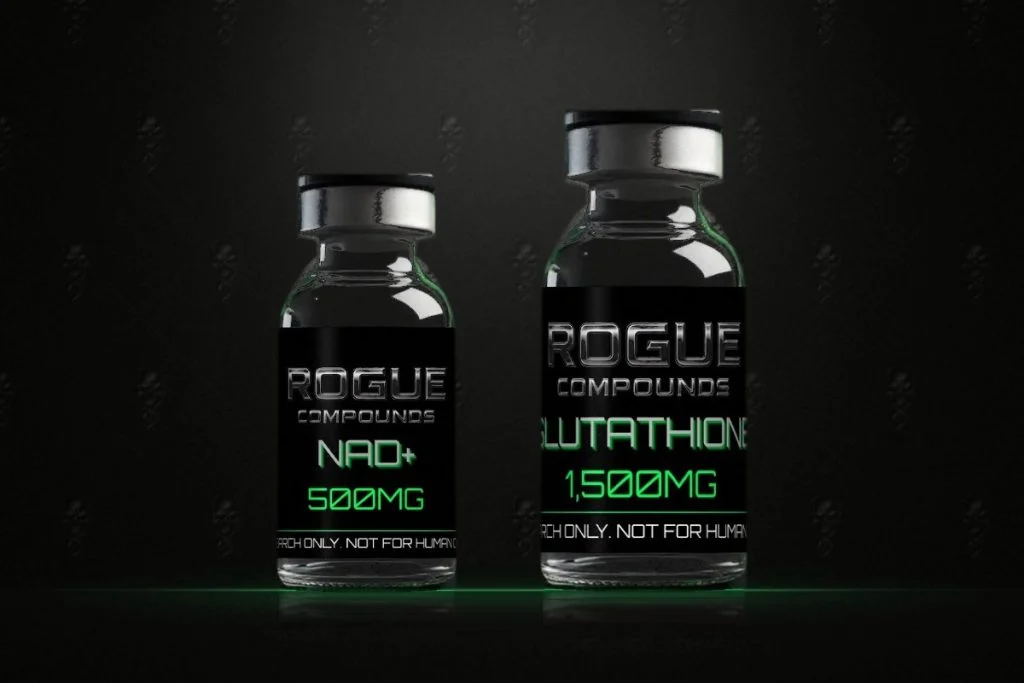 NAD+ + GlutathioneFrom $98.97
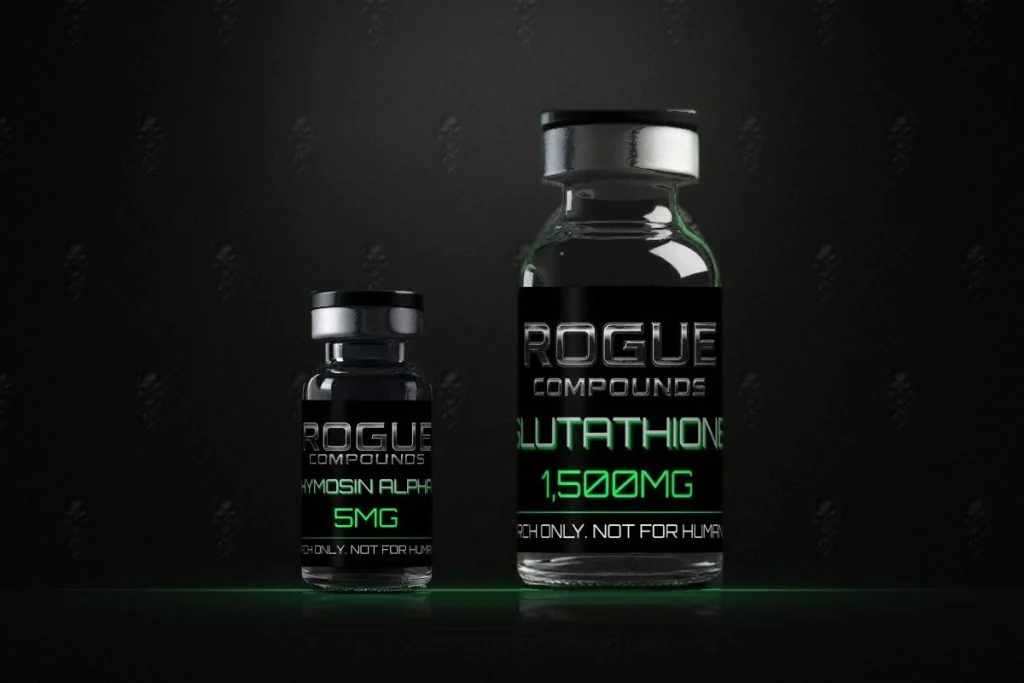 THYMOSIN ALPHA-1 + GlutathioneFrom $113.98
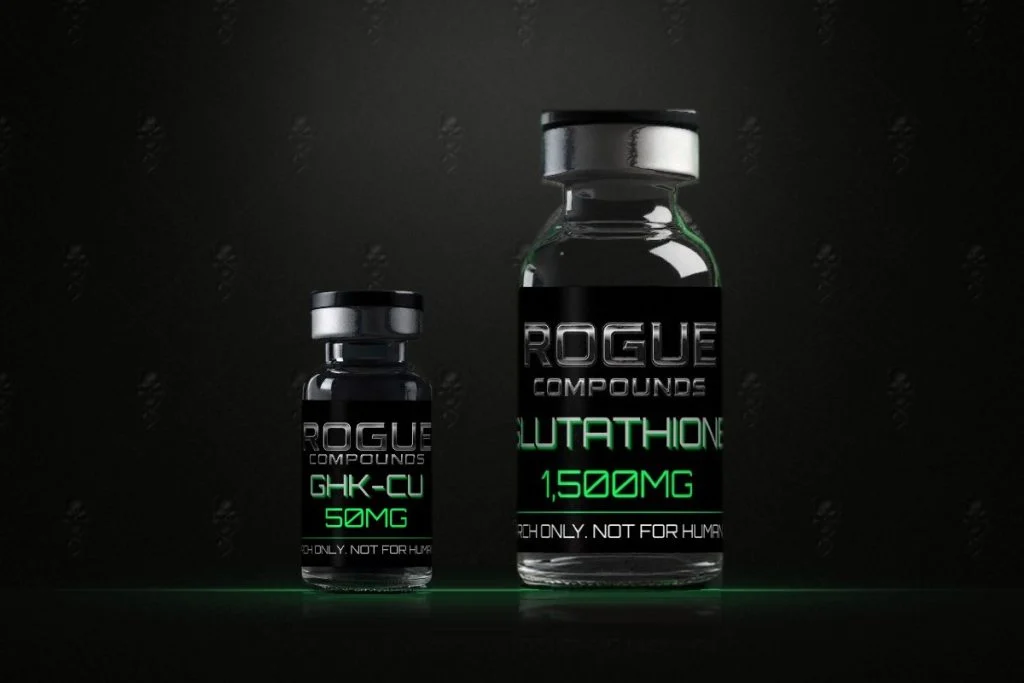 GHK-Cu + GlutathioneFrom $104.48