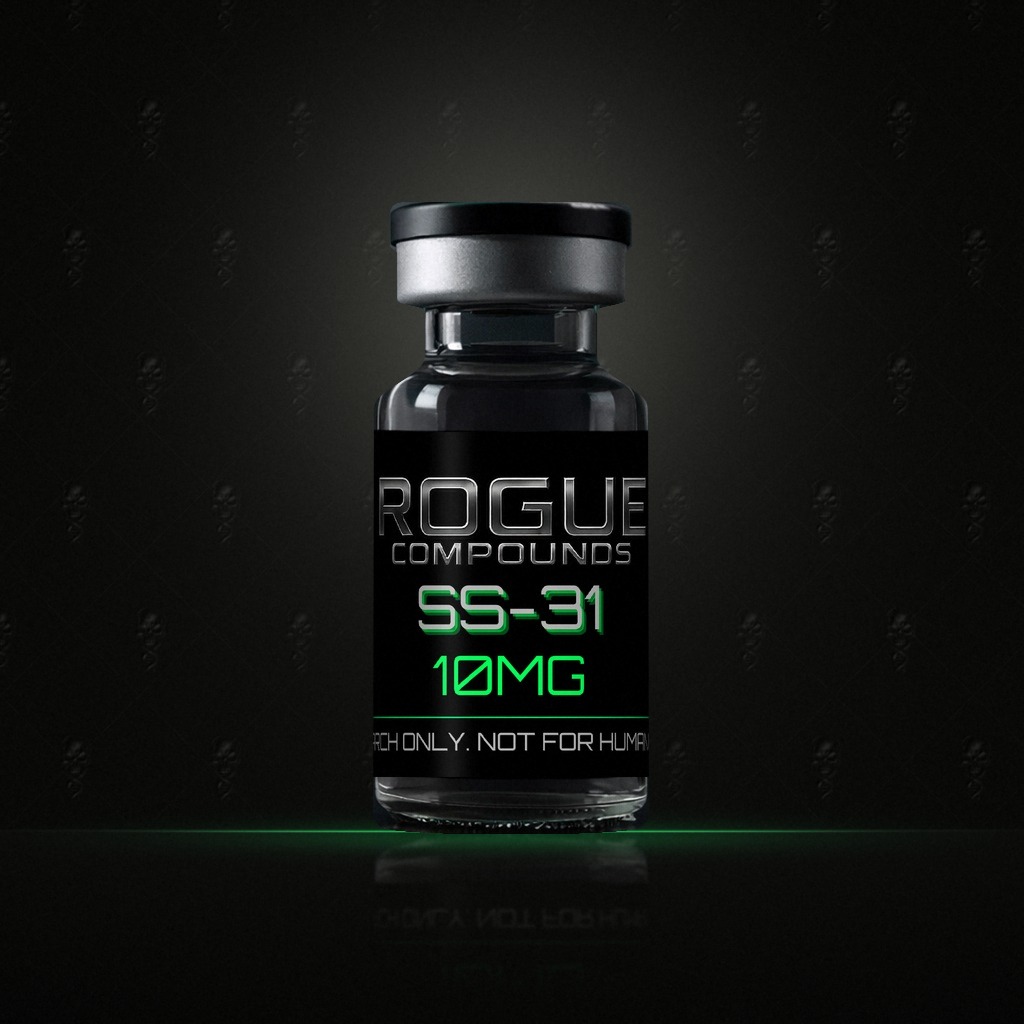
SS-31
SS-31 is a synthetic tetrapeptide from the Szeto-Schiller family of cell-permeable, mitochondria-targeted peptides. Its four residues alternate between aromatic and basic side chains, giving it a net positive charge at physiological pH. That arrangement lets it cross cell membranes and concentrate at the inner mitochondrial membrane, and it does so without relying on the membrane potential that most mitochondria-targeted cations need. In the drug-development literature the same molecule is called elamipretide (also MTP-131).
Product Specifications
- Product: SS-31
- Amount: See available options above
- Form: Lyophilized powder
- Purity: Third-party tested by an ISO 17025 U.S. laboratory. See the batch Certificate of Analysis (COA) on this page.
- Storage: Keep sealed and refrigerated at 2–8°C (36–46°F), protected from light.
- Ships from: United States, 2-day UPS
Chemical Profile
- Compound class: Synthetic tetrapeptide (aromatic-cationic, mitochondria-targeted)
- Sequence: D-Arg-Dmt-Lys-Phe-NH2 (Dmt = 2′,6′-dimethyl-L-tyrosine; C-terminal amide)
- Molecular formula: C32H49N9O5
- Molecular weight: 639.8 g/mol
- CAS number: 736992-21-5
What researchers study
The central question in SS-31 research is how a small peptide interacts with cardiolipin, the phospholipid that is found almost only in the inner mitochondrial membrane and that organizes the respiratory complexes and cytochrome c. Areas of investigation include:
- Cardiolipin binding: biophysical studies of how the peptide associates with cardiolipin-rich membranes and how that affects cytochrome c, including its peroxidase activity and its role in electron transfer.
- Ischemia-reperfusion models: isolated mitochondria and rodent kidney and heart injury models, measuring ATP production, cristae structure and recovery of respiration.
- Mitochondrial aging: aged-mouse studies of skeletal muscle redox state, mitochondrial energetics and how those readouts change during treatment in the model.
- Cardiolipin disorders: cell models of inherited defects in cardiolipin remodeling, a context that shaped the compound’s clinical development.
Most of this work is preclinical. Findings in isolated mitochondria and animal models do not establish effects of the research material sold here.
Regulatory status
In September 2025 the FDA granted accelerated approval to an elamipretide injection for Barth syndrome in patients weighing at least 30 kg. The SS-31 sold here is a research reagent, not that approved drug product, and it is not for human or veterinary use.
Quality & Documentation
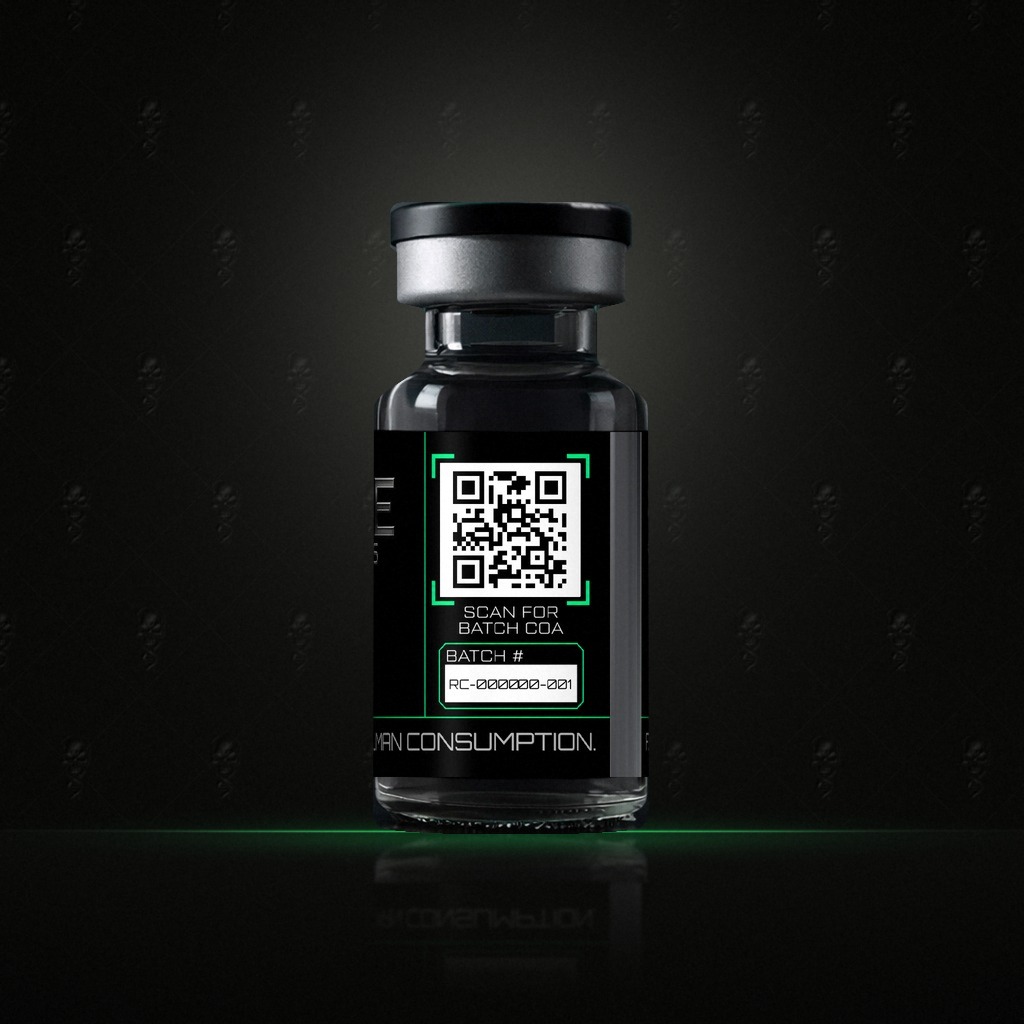
Every batch of SS-31 is made in small runs for Rogue Compounds and tested by an independent U.S. laboratory for identity (mass spectrometry) and purity (HPLC). Each vial is labeled with its batch number and a QR code that opens the testing lab’s own report for that batch. The same batch Certificate of Analysis is posted on this page and in our COA Library, so you can check one against the other.
Research overview
For a longer look at SS-31 (Elamipretide), covering where it came from, what cell and animal studies have measured, and what the evidence does not show, read our SS-31 (Elamipretide) research overview. It is written as background reading, and every study it cites is linked to PubMed.
Selected literature
- Birk AV, et al. The mitochondrial-targeted compound SS-31 re-energizes ischemic mitochondria by interacting with cardiolipin. J Am Soc Nephrol. 2013;24(8):1250-1261. PMID 23813215
- Szeto HH. First-in-class cardiolipin-protective compound as a therapeutic agent to restore mitochondrial bioenergetics. Br J Pharmacol. 2014;171(8):2029-2050. PMID 24117165
- Campbell MD, et al. Improving mitochondrial function with SS-31 reverses age-related redox stress and improves exercise tolerance in aged mice. Free Radic Biol Med. 2019;134:268-281. PMID 30597195
Research Use Only
This product is sold strictly as a research chemical for in-vitro laboratory and analytical use by qualified professionals. It is not a drug, dietary supplement, food, or cosmetic, and it is not intended to diagnose, treat, cure, or prevent any disease. Not for human or veterinary use. Rogue Compounds does not provide dosing, preparation, or usage instructions. The literature on this page is listed for scientific background only and does not describe this product or any use of it.