
Compound comparison
SLU-PP-332 vs 5-Amino-1MQTwo Metabolic Research Compounds Compared
They are often mentioned together, but they work through completely different targets. SLU-PP-332 activates the estrogen-related receptors (ERRs), a family of nuclear receptors that switch on an exercise-like gene program in muscle. 5-Amino-1MQ blocks an enzyme, nicotinamide N-methyltransferase (NNMT), that is highly expressed in fat tissue. This guide compares them side by side.
All compounds discussed are sold for laboratory research use only. This page summarizes published research and is not guidance for human or veterinary use.
At a glance
| SLU-PP-332 | 5-Amino-1MQ | |
|---|---|---|
| Class | Synthetic small molecule; receptor agonist | Synthetic small molecule; enzyme inhibitor |
| Target | Estrogen-related receptors (ERRα, β, γ), most potent at ERRα | Nicotinamide N-methyltransferase (NNMT) |
| How it acts | Turns a pathway on | Turns an enzyme off |
| Main tissue studied | Skeletal muscle (also heart) | White adipose (fat) tissue |
| Origin | Saint Louis University; full description 2023 | University of Texas Medical Branch; described 2018 |
| Molecular weight | 290.3 g/mol | 159.2 g/mol (cation) |
| Research stage | Preclinical (cells and mice) | Preclinical (cells and mice) |
| Rogue Compounds format | Capsules | Capsules |
Two different routes in metabolic research
Most metabolic compounds work by changing either how much energy comes in or how much is burned. SLU-PP-332 and 5-Amino-1MQ are both studied on the energy-use side, but at different points. SLU-PP-332 acts on muscle, pushing it toward the oxidative profile normally produced by aerobic exercise. 5-Amino-1MQ acts mainly in fat tissue, where blocking NNMT shifts how cells handle NAD+ and methyl groups, two inputs that tie into energy metabolism.
SLU-PP-332: the exercise-mimetic receptor agonist
SLU-PP-332 was described in 2023 as a synthetic agonist of all three estrogen-related receptors, with the highest potency at ERRα. In a muscle cell line it increased mitochondrial function and cellular respiration. In mice it increased oxidative type IIa muscle fibers, switched on an ERRα-dependent acute aerobic exercise gene program and improved exercise endurance (Billon et al., 2023).
A separate group reported that ERR agonists including SLU-PP-332 preserved oxidative metabolism and protected the heart in a mouse model of pressure-overload heart failure (Xu et al., 2024). For more, see the SLU-PP-332 research overview.
5-Amino-1MQ: the NNMT inhibitor
Interest in NNMT started with a 2014 study that found it was one of the genes most strongly linked to fat-tissue glucose handling.
5-Amino-1MQ comes from a 2018 series of selective, membrane-permeable NNMT inhibitors. In cultured fat cells, these inhibitors lowered the NNMT product 1-MNA, raised NAD+ and SAM levels and suppressed fat formation. For more, see the 5-Amino-1MQ research overview.
Where their research overlaps
- Energy expenditure: both are studied on the energy-use side rather than for reducing food intake.
- NAD+ and mitochondria: SLU-PP-332 research centers on mitochondrial function in muscle; NNMT research centers on NAD+ and methyl-group balance in fat. Both touch cellular energy metabolism.
- Format: both are small molecules rather than peptides, which is why both are available as capsules.
How researchers choose between them
- To study muscle and exercise signaling, SLU-PP-332 is the relevant compound, since its main effects are on skeletal muscle fiber type and endurance.
- To study fat-tissue metabolism, 5-Amino-1MQ is the relevant compound, since NNMT is most highly expressed in adipose tissue.
- To study nuclear receptor pharmacology, SLU-PP-332 is one of the few ERR agonists with pharmacokinetics suited to in vivo work.
- To study NAD+ and methylation metabolism, 5-Amino-1MQ acts directly on that pathway.
What the research does not show
Both compounds are preclinical. There are no studies comparing them head to head or testing them together. Mouse findings on body weight, fat mass and endurance cannot be assumed to apply to humans.
Verify what you’re working with
Capsule products are tested differently from lyophilized peptides: capsule reports confirm identity and fill weight. Check that the identity result on the certificate of analysis matches the compound you ordered. Our guide on how to read a peptide COA walks through it, and every batch we sell is in the COA Library.
View SLU-PP-332 on Rogue Compounds · View 5-Amino-1MQ Capsules on Rogue Compounds
Frequently asked questions
What is the difference between SLU-PP-332 and 5-Amino-1MQ?
SLU-PP-332 activates the estrogen-related receptors, which switch on an exercise-like gene program in muscle. 5-Amino-1MQ blocks the enzyme NNMT, which is highly expressed in fat tissue. One turns a pathway on; the other turns an enzyme off.
Are SLU-PP-332 and 5-Amino-1MQ peptides?
No. Both are synthetic small molecules, not peptides, which is why both come in capsule form.
Why is SLU-PP-332 called an exercise mimetic?
In mice, it switched on the same ERRα-dependent gene program seen after aerobic exercise, increased oxidative muscle fibers and improved endurance.
Are SLU-PP-332 and 5-Amino-1MQ for human use?
No. Rogue Compounds sells both as research chemicals, not for human use. They are for laboratory research only.
References
- Kraus D, et al. Nature. 2014;508(7495):258-262. PMID 24717514
- Pissios P. Trends Endocrinol Metab. 2017;28(5):340-353. PMID 28291578
- Neelakantan H, et al. Biochem Pharmacol. 2018;147:141-152. PMID 29155147
- Billon C, et al. ACS Chem Biol. 2023;18(4):756-771. PMID 36988910
- Billon C, et al. J Pharmacol Exp Ther. 2024;388(2):232-240. PMID 37739806
- Xu W, et al. Circulation. 2024;149(3):227-250. PMID 37961903
Research use only. Rogue Compounds products are sold strictly for laboratory research. They are not for human or veterinary use, and nothing in this article is medical advice. The studies cited here describe published research, not this product or any use of it.
Compounds researchers often order together, 5% off as a set. Every vial ships with its batch COA.
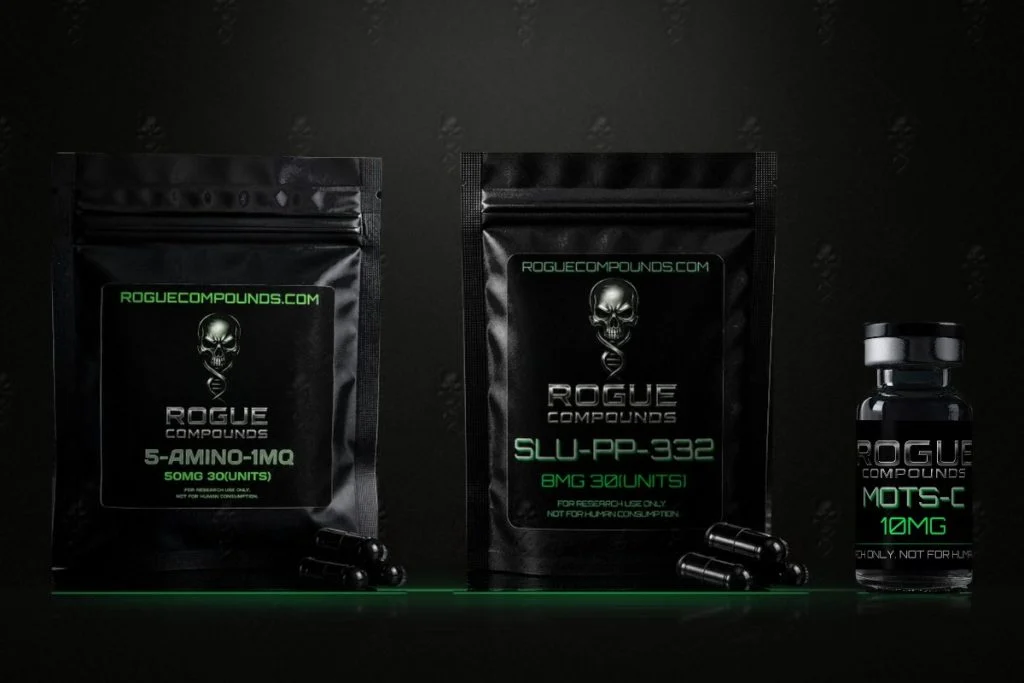 5-AMINO-1MQ CAPSULES + SLU-PP-332 + MOTS-cFrom $169.55
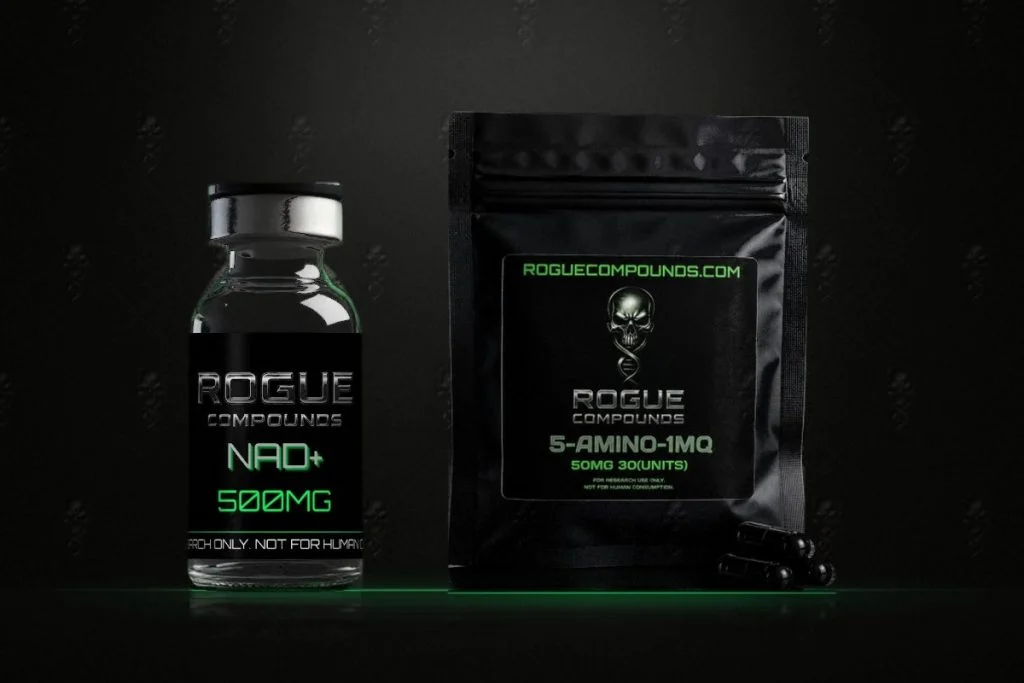 NAD+ + 5-AMINO-1MQ CAPSULESFrom $113.22
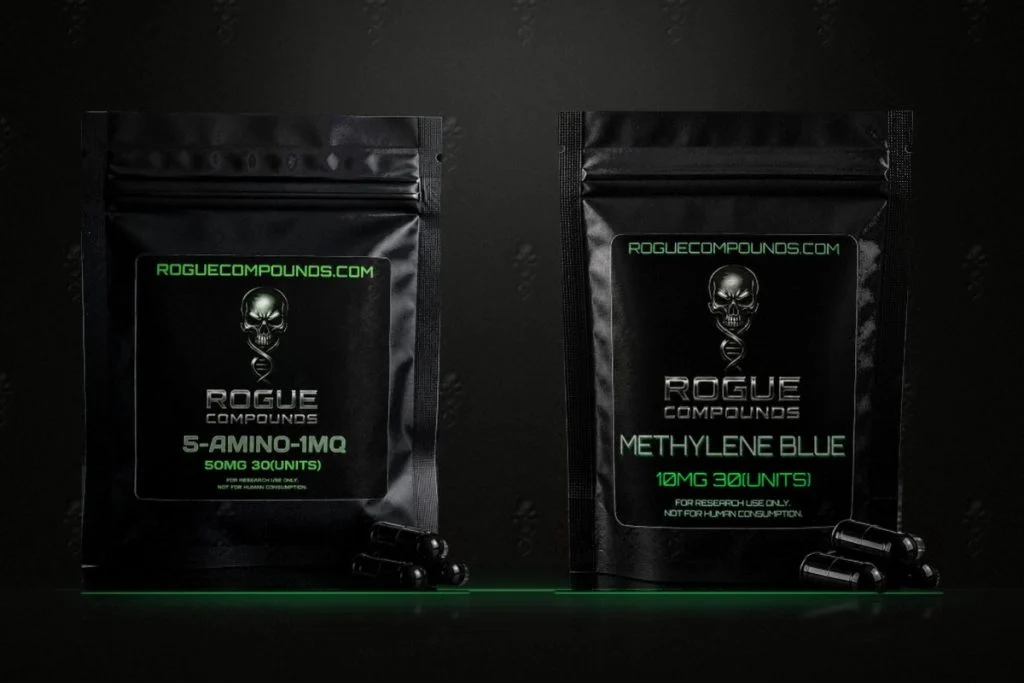 5-AMINO-1MQ CAPSULES + METHYLENE BLUEFrom $113.98